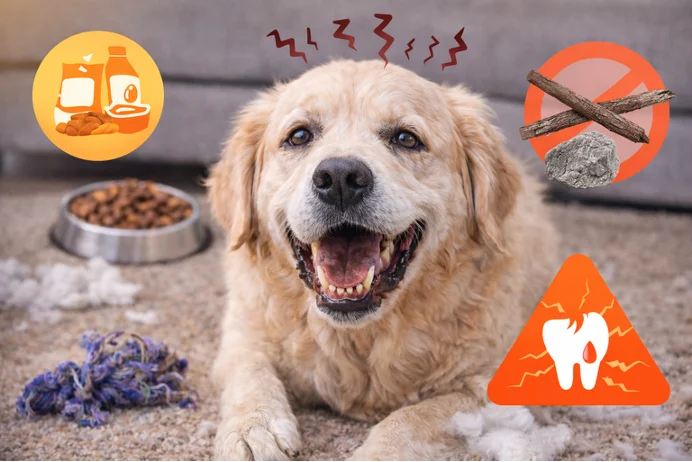
A dog’s dental health often goes unnoticed until problems such as bad breath, pain, or infections appear. However, many of these issues originate from everyday habits that, without realizing it, negatively affect their mouth and teeth.
One of the most common habits is providing no form of dental care. The lack of brushing, check-ups, or cleaning alternatives encourages the buildup of bacterial plaque and tartar, which can lead to gingivitis and periodontal disease.
Another frequent mistake is a low-quality diet, especially very soft foods or those high in sugars and additives. These types of foods easily stick to the teeth and feed the bacteria responsible for bad breath and gum inflammation.
Dental health is also affected when dogs are not allowed to chew properly. Dogs need to bite and chew to perform a natural mechanical cleaning of their teeth. The absence of appropriate hard snacks or chew toys prevents this process and accelerates tartar formation.
Giving inappropriate objects to chew, such as stones, very hard sticks, or poor-quality toys, is another harmful habit. These can cause dental fractures, excessive wear, or gum injuries.
Finally, ignoring warning signs such as bleeding gums, refusal to eat, or changes in breath delays treatment and worsens existing problems.
Adopting good habits from an early age, including proper nutrition, safe chewing, and regular check-ups, is key to maintaining a healthy mouth and preventing long-term dental issues.