Chewing is a completely natural and necessary behavior in dogs. It is not a bad habit, but an instinctive action that fulfills key functions for their physical, mental, and emotional development.
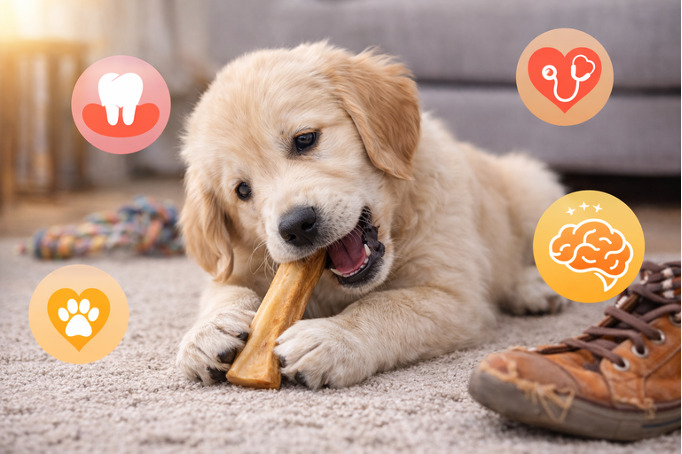
From puppyhood, dogs use their mouths to explore the world. During the teething stage, chewing helps relieve gum discomfort and strengthen the jaw. If appropriate objects are not provided, it is common for them to turn to furniture, shoes, or other household items.
Chewing is also an effective way to release stress and anxiety. When a dog chews, they relax, focus, and channel their energy, contributing to a state of calm. For this reason, dogs who lack sufficient chewing stimulation may develop destructive or nervous behaviors.
Another important reason is mental stimulation. Chewing keeps the dog occupied, prevents boredom, and provides an activity that mimics natural behaviors such as gnawing or tearing. This is especially relevant for active or intelligent dogs.
In addition, chewing supports dental health by mechanically reducing tartar and plaque buildup, strengthening teeth and gums.
For all these reasons, offering safe and appropriate chewing options not only prevents behavioral problems but also improves a dog’s overall well-being. Understanding this need is key to having a more balanced, calm, and happy dog.